
Deck Staining in Connecticut: When, How Often and Which Stain to Choose
Transparent, semi-transparent or solid? Here's how to choose a deck stain that suits your wood and lasts through Connecticut seasons.
How salt air, sun and humidity affect exterior paint on Connecticut Shoreline homes, and how prep, products and timing help the finish last.
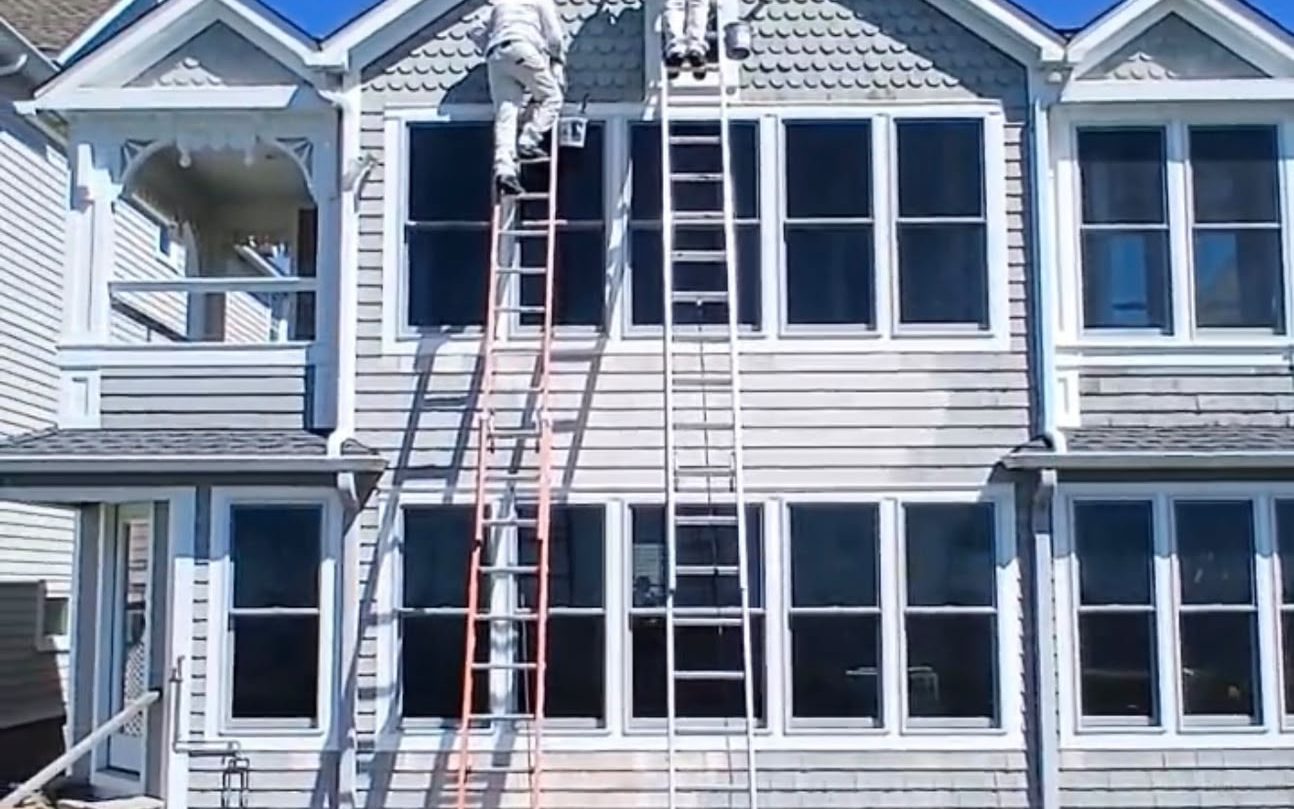
Living along the Connecticut Shoreline, from Branford and Guilford to Madison, Clinton, Westbrook, Old Saybrook and Old Lyme, comes with beautiful views and a demanding environment for exterior paint. Salt in the air, strong sun reflected off the water, high summer humidity and winter storms all wear down coatings faster than they would a few miles inland. The good news is that a well-planned exterior paint job can still last for years. It just takes the right preparation, products and timing.
Salt is the first challenge. Airborne salt settles on siding and trim, attracts moisture and can interfere with how new paint bonds if it isn't washed off. Over time, salt also accelerates the breakdown of older coatings, especially on surfaces that don't get rinsed by rain.
Sun is the second. Walls facing south and toward the water receive intense UV exposure, which fades colors and makes paint chalky. That's why one side of a shoreline house often looks worn while the others still look fine.
Humidity and moisture are the third. Damp mornings, fog and wind-driven rain keep wood wet for longer, which can lead to mildew, peeling and rot if water gets behind the paint.
On the Shoreline, preparation determines how long your paint will last. A thorough wash removes salt, mildew and chalk so the new coating bonds directly to a clean surface. Loose and peeling paint must be scraped and sanded back to a sound edge.
Bare wood needs primer, and knots or cedar surfaces that bleed tannins need a stain-blocking primer. Failed caulk around windows, doors and trim joints should be removed and replaced so water can't get behind the siding.
After washing, wood needs time to dry completely before primer goes on. On humid coastal days, that can take longer than expected. Painting over damp wood traps moisture and is one of the most common causes of early peeling.
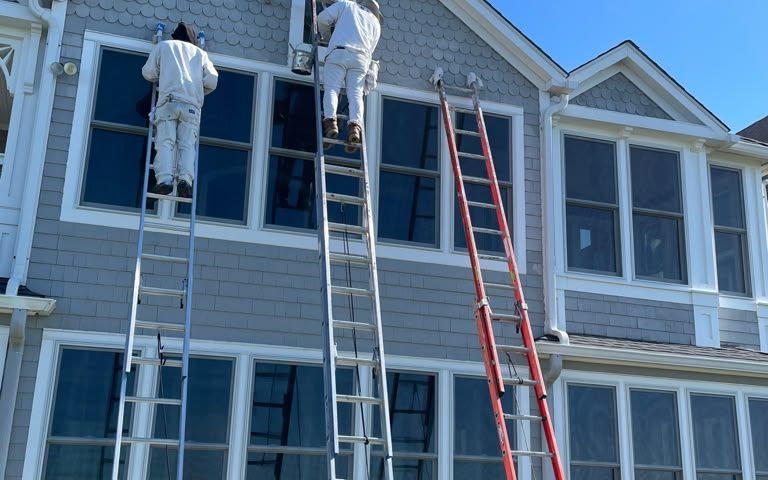
High-quality 100% acrylic exterior paints are generally the best choice for coastal homes because they stay flexible, resist UV damage and allow moisture vapor to escape. Premium product lines also tend to hold color longer on sun-exposed walls.
Sheen matters too. Satin finishes on siding shed dirt and salt better than flat finishes, while semi-gloss on trim and doors gives a durable, easy-to-clean surface. For shaded areas prone to mildew, paints with mildew-resistant additives help.
Exterior paint has minimum temperature requirements for both the air and the surface, and it needs time to dry before dew or rain arrives. On the Shoreline, late spring through early fall offers the most reliable conditions, though cool mornings and evening dew can shorten the working day.
A professional crew plans around these factors, moving around the house with the sun and rescheduling when conditions aren't right.
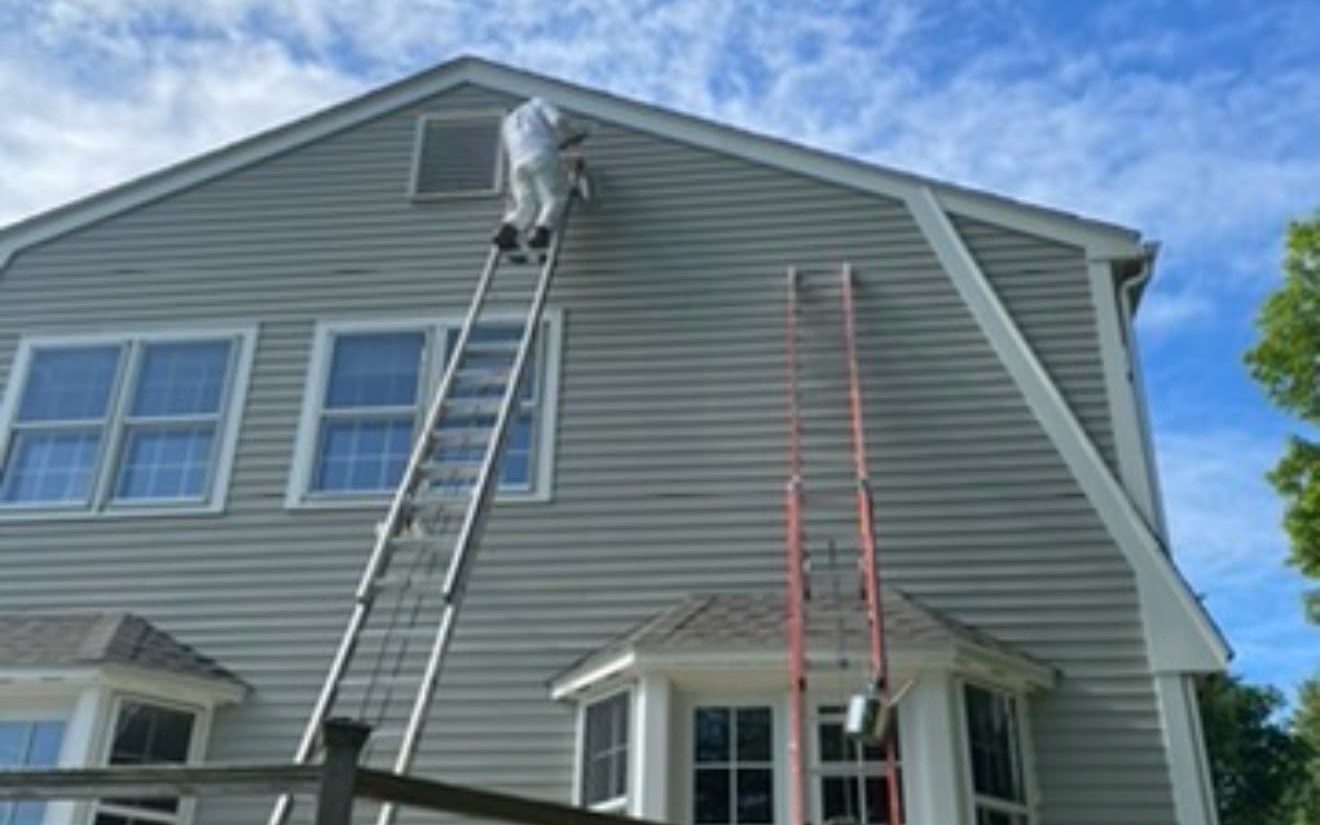
Horizontal surfaces like decks, railings and window sills take the worst of the weather. On coastal properties, deck stain often needs refreshing more frequently than siding paint. Read our deck staining guide for advice on choosing between transparent, semi-transparent and solid stains.
Trim, especially on the water side, should be inspected every year or two. Touching up small areas before they fail can extend the life of the whole paint job.
The best way to protect a coastal home is to keep up with small maintenance tasks. Rinse the siding with a garden hose once or twice a year to remove salt buildup. Check caulk joints and touch up chipped trim promptly. Keep plants trimmed back from the siding so air can circulate.
Following these steps keeps your exterior looking good longer and makes the next full repaint simpler and less expensive.
Strong sun reflected off the water fades deep, saturated colors faster than lighter ones. Dark blues, reds and blacks can look stunning on a shingle-style house, but they may need refreshing sooner on walls with full southern exposure. Light and mid-tone colors tend to hold their appearance longer and also keep siding cooler in summer.
Many Shoreline homeowners choose crisp white or off-white trim with soft grays, muted blues or natural cedar tones on the body. Whatever you choose, look at large samples on the actual walls in morning and afternoon light, because coastal light can make colors appear brighter than they do on a paint chip.
Some warning signs mean it's time to act before the next season. Peeling or blistering paint, especially near the bottom of siding boards, often points to moisture getting behind the coating. Chalky residue that rubs off on your hand shows the paint has broken down. Gaps in caulk around windows and doors let water in, and soft spots in trim or sills may indicate rot.
Catching these issues early keeps repairs small. A section of trim replaced and repainted today costs far less than rebuilding a window frame after several wet winters. If you notice any of these signs, a walkaround with a professional painter can tell you whether a few targeted repairs will carry the house for another season or whether a full repaint is the better investment.
Some Shoreline neighborhoods and beach associations have guidelines for exterior colors, and certain historic districts along the coast review changes to the appearance of older homes. Before choosing a bold new palette, check whether your property has any restrictions or approval steps.
A painter familiar with the area can often suggest palettes that fit these guidelines while still giving the house a fresh look, and can schedule the work once any approvals are in hand.
Keeping a copy of any approval letters with your painting contract is also wise, in case questions come up years later when the house is sold.
If your home is showing signs of wear, now is a good time to plan. Exterior schedules fill quickly once spring arrives. Learn more about our exterior painting service, see the towns we cover on our service areas page, or request a free exterior estimate.
It depends on exposure, products and prep, but coastal homes generally need attention sooner than inland homes, especially on walls and trim facing the water.
Yes. Salt attracts moisture and can break down coatings over time. Washing before painting and periodic rinsing help protect the finish.
Premium 100% acrylic exterior paints are generally recommended for their flexibility, UV resistance and ability to let moisture vapor escape.

Professional painters based in Hamden, CT, serving homeowners across New Haven County, the Shoreline and the River Valley.
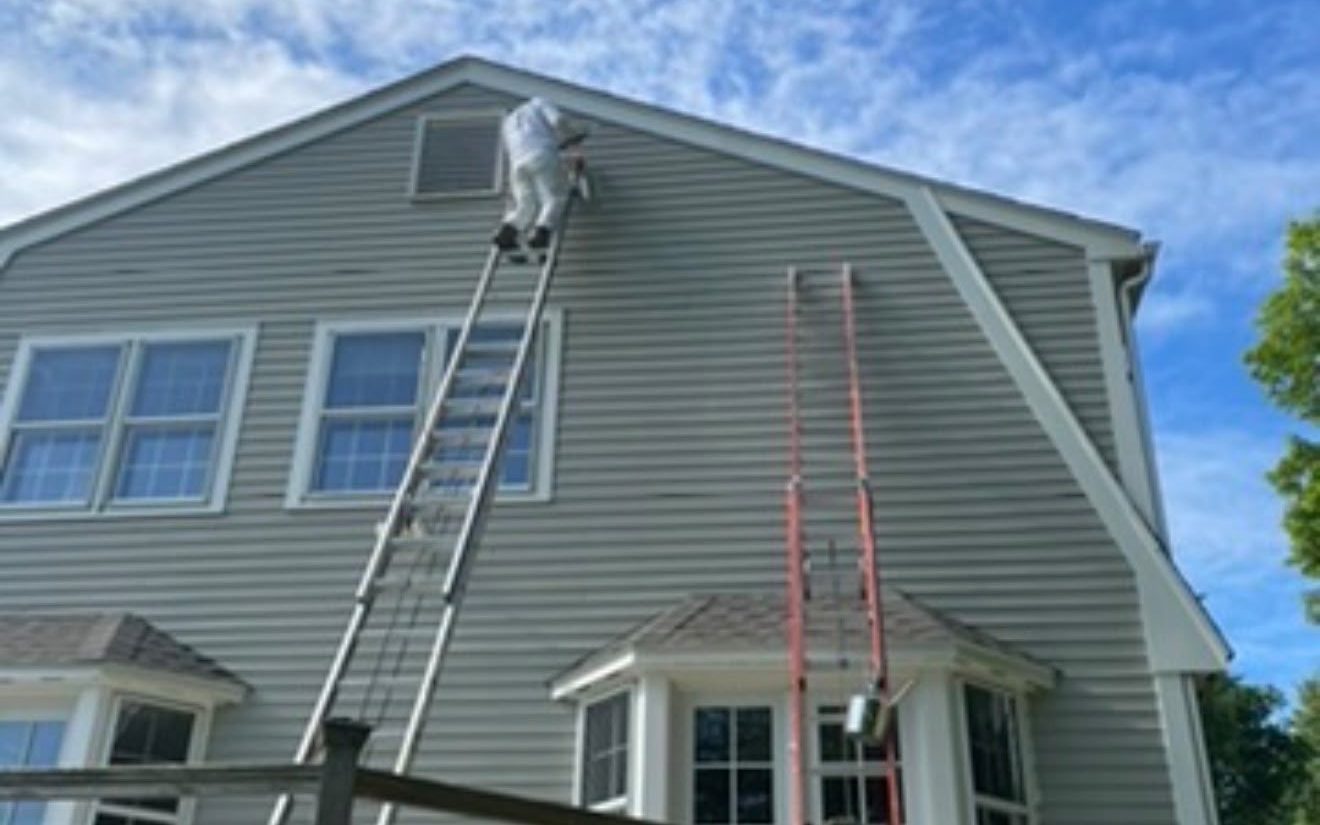
Transparent, semi-transparent or solid? Here's how to choose a deck stain that suits your wood and lasts through Connecticut seasons.
Registration, insurance and a written contract protect your home. Here's how to verify all three in a few minutes.
Put this advice to work. Request a free written estimate and we'll walk through your project with you.